- LET'S PLAN YOUR SAFARI
- +256 200 921 002
- +256 793 194 703
- info@gorillatrackingtours.com

1 Day Gorilla Trekking from Kigali.
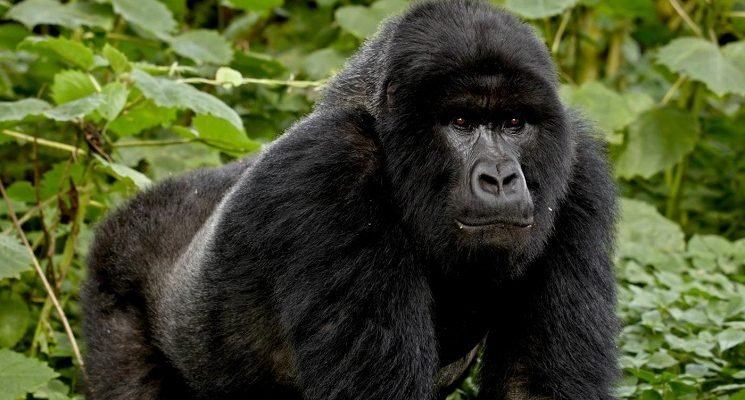
1 Day Gorilla Trekking from Kigali. Meeting a mountain gorilla in the wild is the kind of experience most travelers assume requires a week of vacation time, a multi-country visa saga, and a budget to match. It doesn’t. If you’re flying into Kigali, Rwanda, and you only have one free day in your itinerary, you can still cross into Uganda, spend a full hour with a wild gorilla family, and be back in your Kigali hotel bed by nightfall.
This is the promise — and the reality — of a one-day gorilla trekking safari from Kigali. It’s a long day, no question. But it is also one of the most efficient wildlife encounters on the planet: two countries, one volcano range, and one of the rarest animals on Earth, all inside about 15 hours.
In this guide, we’ll walk you through exactly how the day unfolds, what it costs, what to pack, who it suits, and how it compares to the slower alternatives. If you’d rather see the finished itinerary laid out with pricing, our One Day Uganda Gorilla Safari Starting from Kigali page has the full breakdown — but read on first, because there are a few things worth knowing before you commit to a single, unforgettable day on the road.
Why Start Your Gorilla Trek from Kigali Instead of Entebbe
Most people picture gorilla trekking as a Uganda-only adventure launched from Entebbe. That’s still a completely valid way to do it, but it comes with a catch: Bwindi Impenetrable Forest and Mgahinga Gorilla National Park sit in Uganda’s far southwest corner, and the drive down from Entebbe typically takes 9 to 11 hours on winding roads.
Kigali, on the other hand, sits far closer to the Virunga volcanoes. The Rwandan capital is roughly a 3 to 4-hour drive from the Cyanika border post, which opens directly onto Mgahinga Gorilla National Park. That difference — a half-day drive instead of a full day, sometimes two — is the entire reason short gorilla safaris from Kigali have become so popular with travelers who are combining a Rwanda trip with a quick dip into Uganda, or who are simply short on vacation days.
It also helps that Kigali International Airport is one of the best-connected hubs in East Africa, with direct or one-stop flights from Europe, the Middle East, and increasingly North America. That makes Kigali a natural starting and ending point for a fast-paced gorilla adventure, whether you’re staying for one day or extending into our 2 Days Uganda Gorilla Tour Starting from Kigali for a gentler pace.
There’s also a practical booking advantage to starting from Kigali. Many travelers build their East Africa trip around a Rwanda gorilla permit, a Kenya safari, or a business trip to Kigali, then discover they have a single free day before flying home. Rather than leaving that day unused, a Kigali-based one-day Uganda trek turns a gap in the itinerary into one of the trip’s headline experiences — without requiring a separate flight, a new hotel booking, or a significant restructuring of the rest of the trip.
Kigali itself deserves a mention here too. Africa’s cleanest and most walkable capital is worth a day or two on either side of your trek — a short stroll through the Kigali City area, a visit to a local market, or simply a relaxed evening at your hotel before the early alarm clock. Because the one-day trek departs and returns to the same city, it slots neatly into a longer Rwanda itinerary without forcing you to change hotels or repack for an overnight stay elsewhere.
What Exactly Is a One-Day Gorilla Trek from Kigali?
In plain terms, a one-day gorilla trek from Kigali is a same-day round trip that takes you from your Kigali hotel, across the Rwanda–Uganda border, into Mgahinga Gorilla National Park, through a guided forest trek to see a habituated gorilla family, and back to Kigali — all without an overnight stay in Uganda.
It’s built around a few non-negotiable pieces:
- A pre-dawn departure from Kigali, because the border crossing and the trek both need daylight and time.
- A single mountain gorilla trekking permit, issued by the Uganda Wildlife Authority, which grants you one hour with the gorillas once you find them.
- A private 4×4 vehicle and driver-guide who knows the Cyanika crossing, the park logistics, and the road conditions well enough to keep the whole day on schedule.
- A late return to Kigali, typically in the early evening, in time for dinner or a connecting flight.
It is not a leisurely safari. It’s a tightly choreographed day that rewards travelers who don’t mind an early alarm clock in exchange for maximum experience per hour spent traveling.
It’s also worth being clear about what this trip is not. It is not a photographic safari with time to set up tripods and wait for perfect light, it is not a wildlife-dense game drive with multiple animal sightings, and it is not a trip with much flexibility for spontaneous detours. It is, very specifically, a focused mission: cross the border, meet the gorillas, come home. That focus is exactly what makes it possible to do in a single day, and exactly why travelers with more relaxed schedules often choose to slow it down using one of our longer itineraries instead.
Mgahinga Gorilla National Park: Where You’ll Trek
Unlike the more famous Bwindi Impenetrable Forest, a one-day itinerary from Kigali takes you to Mgahinga Gorilla National Park, Uganda’s smallest national park. Mgahinga sits right on the border with Rwanda and the Democratic Republic of Congo, in the shadow of three dormant volcanoes — Mount Muhabura, Mount Gahinga, and Mount Sabyinyo — that form part of the wider Virunga Mountains range shared by all three countries.
Because Mgahinga is directly accessible from the Cyanika border post, it is the only realistic gorilla trekking destination for a genuine single-day round trip from Kigali. Bwindi’s gorilla families, while more numerous, sit farther from the border and generally require an overnight stay, which is why multi-day options like our 3 Days Uganda Gorilla Safari from Rwanda route through Bwindi instead.
What Mgahinga lacks in size, it makes up for in atmosphere. The park’s bamboo forests and volcanic slopes are quieter and far less visited than Bwindi’s, which means your trekking day tends to feel more intimate — fewer vehicles at the trailhead, fewer groups moving through the forest, and a real sense of remoteness even though you crossed an international border just an hour earlier.
Beyond the gorillas, Mgahinga is also one of the best places in Uganda to spot golden monkeys, a species endemic to the Virunga and Albertine Rift region. While a one-day gorilla itinerary doesn’t typically leave room for a separate golden monkey trek, travelers who add an overnight stay — as in our 2-Day Gorilla Safaris from Kigali — often combine both experiences into a single, richer visit to the park.
Meet the Nyakagezi Family
Mgahinga has one habituated gorilla group available for trekking: the Nyakagezi family. Unlike most gorilla families, which are led by a single dominant silverback, Nyakagezi is unusual in that it has historically included multiple silverbacks living together, alongside females and youngsters — a social structure that primatologists and trekkers alike find fascinating to observe.
Because there’s only one habituated family in Mgahinga, permits are limited to a small number of travelers each day. That scarcity is part of what makes the Mgahinga trekking experience feel different from Bwindi’s busier sectors — smaller groups, quieter forest, and rangers who know their gorilla family intimately, having tracked the same individuals for years.
Trekking to reach Nyakagezi can range from a short walk to several hours, depending on where the family has moved to feed the previous day. Once located, every visitor is guaranteed exactly one hour in their presence, regulated closely by Uganda Wildlife Authority rangers to protect both visitors and gorillas.
That guaranteed hour is worth dwelling on for a moment, because it’s easy to underestimate on paper and hard to overstate in person. Sixty minutes spent a few meters from a family of wild mountain gorillas — watching a mother groom her infant, a juvenile tumble through the undergrowth, or a silverback simply sit and observe you back — tends to be the part of the trip travelers talk about years later, long after the early wake-up call and the border paperwork have faded from memory.
Hour-by-Hour: Your Day at a Glance
Here’s how a typical one-day gorilla trekking day from Kigali actually unfolds, start to finish:
03:00 – 03:30 — Early pickup in Kigali. Your driver-guide collects you from your hotel or from Kigali International Airport. This early start is the linchpin of the entire day — skip it, and the single-day round trip stops being realistic. Grab coffee and a light snack before you set off.
03:30 – 06:30 — Drive to the border. You’ll travel northwest through Rwanda’s rolling countryside — the scenery that earned Rwanda its nickname, the “Land of a Thousand Hills” — toward the Uganda frontier.
Around 06:30 – 07:00 — Cyanika border crossing. You’ll clear Rwandan exit formalities and Ugandan entry formalities at the Cyanika post, one of the most straightforward crossings in the region for travelers with the correct documentation.
07:30 – 08:00 — Arrival at Ntebeko park headquarters. A short drive from the border brings you to Mgahinga’s entrance, where you’re welcomed with tea or coffee and briefed by your ranger guide on trekking etiquette, safety protocols, and what to expect in the forest.
08:00 – 13:00 — Mountain gorilla trekking. You head into the bamboo and montane forest on the lower slopes of the Virunga volcanoes. Once your guides locate the Nyakagezi family — using notes from the previous day’s tracking — you get your full hour observing them feed, rest, and interact at close range.
13:00 – 14:00 — Lunch and certificate. After descending, you’ll receive your official trekking certificate and enjoy a packed lunch near the park headquarters before starting the return leg.
14:00 – 18:00 — Return drive to Kigali. You’ll retrace the route back across Cyanika into Rwanda, with a comfort stop along the way, arriving back in Kigali in the early evening — in time for dinner or a connecting flight home.
All told, it’s a 14 to 16-hour door-to-door day. It is long by any measure, but every hour of driving is bookended by something genuinely worth the effort.
A useful way to think about the schedule: roughly seven hours of it is driving (split across both legs of the round trip), five hours is trekking and time with the gorillas, and the remainder is border formalities, the ranger briefing, and lunch. Knowing that breakdown in advance helps set realistic expectations — this is a day built around movement, not downtime.
Crossing the Cyanika Border: What to Expect
The Cyanika border post between Rwanda and Uganda is one of the more traveler-friendly crossings in East Africa, particularly for anyone heading toward Mgahinga or the southern sectors of Bwindi. Immigration formalities here are typically quick for travelers who arrive with the correct paperwork, though it’s still an official international frontier, so patience and the right documents matter.
A few practical notes worth keeping in mind:
- Have your passport, visa documentation, and any required entry permits ready and easily accessible — you don’t want to be digging through a packed bag at 6:30 a.m.
- Border hours and processing times can shift with staffing and travel volumes, so building in a buffer (as our itinerary does) protects the rest of your day.
- Your driver-guide will typically handle much of the logistical coordination on your behalf, which is one of the strongest arguments for booking a guided one-day trip rather than attempting the crossing independently.
Because this is a same-day, two-country trip, the border crossing happens twice — once heading into Uganda in the early morning, and again heading back into Rwanda in the late afternoon. Both crossings are built into the schedule above with realistic time allowances.
One more thing worth knowing: currency and connectivity change the moment you cross. Rwandan francs and Ugandan shillings are both useful to have in small amounts, and mobile data plans typically don’t roam seamlessly between the two countries unless you’ve arranged for it in advance. Neither is a major obstacle on a guided day trip, but it’s worth mentioning to family back home that you may be briefly uncontactable while in transit through the border zone.
Gorilla Permits: Cost, Availability, and Booking Windows
A mountain gorilla trekking permit for Mgahinga Gorilla National Park is issued by the Uganda Wildlife Authority and is the single most important — and most limited — resource in the entire trip. Because Mgahinga has only one habituated family, permits are capped at just eight per day. That’s a fraction of what’s available across Bwindi’s multiple sectors, which makes early booking essential.
A complete one-day gorilla safari package from Kigali, permit included, typically starts from around $1,100 per person, covering the permit itself, private round-trip transport, fuel, a driver-guide, bottled water, and a packed lunch. You can see the full cost breakdown on our One Day Uganda Gorilla Safari Starting from Kigali tour page.
Because of the eight-permit daily cap, this is not a trip to book at the last minute — especially if you’re traveling during the June to September or December to February peak seasons, when demand for Virunga-area permits climbs sharply. Booking several weeks to a few months ahead gives you the best chance of securing a spot on your preferred date.
It’s also worth understanding why the permit costs what it does. Permit fees fund ranger salaries, anti-poaching patrols, habitat conservation, and veterinary monitoring of the habituated families — costs that scale with the intensity of care each gorilla group receives. Compared to gorilla permits in some neighboring destinations, Uganda’s pricing sits in the middle of the regional range, while offering the added advantage of Mgahinga’s quieter, less-visited trekking experience.
How Group Size and Private Transport Affect Your Day
Because this itinerary hinges on tight timing across two border crossings, we run it as a private trip rather than a shared group tour. Traveling with your own driver-guide and vehicle means the schedule bends around your pace, not a bus full of strangers — if your trekking group finds the gorillas faster than expected, you can start the return drive earlier; if the border queue runs long, your guide can adjust the rest of the day accordingly.
Private transport also matters for comfort on what is already a demanding day. A dedicated 4×4 with a driver who knows the route means you can rest during the long driving legs, stop when you need to, and avoid the scheduling compromises that come with shared shuttle services. For families, couples, or small groups of friends traveling together, this also means the itinerary can flex slightly around your specific needs — an earlier pickup if you prefer more buffer time, or a later one if you’re coming straight off a red-eye flight into Kigali.
What’s Included (and What Isn’t)
A well-structured one-day gorilla safari from Kigali should include:
- One gorilla trekking permit for Mgahinga Gorilla National Park
- Round-trip private 4×4 transport from Kigali to Mgahinga and back, with an English-speaking driver-guide
- Fuel and all ground transport costs
- Bottled drinking water for the journey
- A packed lunch on trekking day
- All applicable government taxes
Typically excluded, and worth budgeting for separately:
- Rwanda and/or Uganda entry visas
- Travel insurance
- Tips and gratuities for your driver-guide and park rangers
- Personal expenses, souvenirs, and extra drinks
- Optional porter fees at the park (a small cost that goes directly to the local community — genuinely worth paying)
- Kigali hotel accommodation before or after the trip
Knowing this breakdown in advance helps you budget accurately and avoids surprises on trekking day.
Visa Requirements: The East Africa Tourist Visa
Because this itinerary crosses an international border twice in a single day, your visa situation matters more than it would on a standard one-country safari. The good news is that many nationalities qualify for the East Africa Tourist Visa, a single multiple-entry visa that covers Rwanda, Uganda, and Kenya — exactly the kind of document designed for same-day border crossings like this one.
You can find current, official guidance directly from the Uganda Directorate of Citizenship and Immigration Control, which is the authoritative source for eligibility, fees, and application procedures. Visa rules and reciprocal agreements do change from time to time, so we always recommend confirming your specific requirements before travel rather than relying solely on secondhand information — including this guide.
If your nationality doesn’t qualify for the East Africa Tourist Visa, single-entry visas for Rwanda and Uganda are usually still workable for this trip, but they add an extra layer of planning. Reach out to our team via our contact page and we’ll help you figure out the cleanest visa path for your passport before you book.
Timing matters here too. Visa applications, whether for the East Africa Tourist Visa or single-entry alternatives, are usually processed online and can take anywhere from a few days to a couple of weeks depending on your nationality and the current processing volume. Sorting your visa well before your travel dates removes one more variable from an already logistics-heavy day, and it means you can focus your final pre-trip planning on packing and permits rather than paperwork.
Fitness and Physical Demands: Can You Handle It?
Gorilla trekking is physically demanding, and Mgahinga’s volcanic terrain doesn’t cut corners. Trails run steep and can turn muddy fast, particularly during the rainy seasons, and altitude on the lower slopes of the Virunga volcanoes adds an extra layer of exertion that catches some travelers off guard.
A few honest guidelines:
- Minimum age for gorilla trekking is 15, a rule set by the Uganda Wildlife Authority and enforced without exception.
- A reasonable level of fitness is recommended — you don’t need to be an athlete, but you should be comfortable with a few hours of uneven, sometimes steep hiking.
- Walking poles make a real difference on Mgahinga’s slopes and are worth packing or renting locally.
- Porters are available to carry your daypack and offer a supportive hand on tricky sections — hiring one is inexpensive, helpful, and directly supports the local community.
If you have any concerns about your fitness level or existing medical conditions, it’s worth discussing them with your doctor before committing to the trip, and letting us know when you book so we can set the right expectations for your trekking day.
It’s also worth factoring in that a one-day itinerary compresses recovery time in a way multi-day trips don’t. On a two or three-day safari, you have an evening to rest after the trek before traveling again. On this itinerary, the return drive to Kigali begins almost immediately after you come off the mountain, so travelers who tire easily on long car journeys should weigh that honestly against the appeal of doing everything in a single day.
What to Pack for the Day
Because everything you bring travels with you for the entire 14-to-16-hour day, packing smart matters. Here’s what experienced trekkers bring:
- Sturdy, waterproof hiking boots — broken in, not brand new
- Long trousers and long sleeves, in neutral colors, to protect against nettles and undergrowth
- A rain jacket, even in the dry season — mountain weather in the Virungas is unpredictable
- Gardening gloves, useful for gripping vegetation on steep sections
- A hat and sunscreen for the drive and the open sections of trail
- Insect repellent
- A camera without flash — flash photography disturbs the gorillas and is prohibited
- A daypack for water, snacks, and personal items
- Cash in small denominations for tips and porter fees
Pack light. Since there’s no overnight stop, you won’t need anything beyond what fits comfortably in a daypack plus what you’re wearing.
A quick photography note, since it comes up often: while flash is prohibited, a camera with a reasonably fast lens or a phone with good low-light performance will serve you well, since the forest canopy filters out a lot of direct light even on sunny days. Bring extra battery power or a portable charger — between the drive, the trek, and the return journey, devices tend to run down faster than expected on a day this long.
Best Time of Year for a One-Day Gorilla Trek
Mgahinga Gorilla National Park is open for trekking year-round, but conditions do shift with the seasons. The dry seasons — roughly June to September and December to February — offer the most reliable trekking conditions, with firmer trails and generally clearer mountain views. These months are also peak season for permit demand, which loops back to why early booking matters so much for a permit-capped park like Mgahinga.
The wetter months, particularly March to May and October to November, bring lusher scenery and fewer crowds, but also muddier, more physically demanding trails. Neither season eliminates the possibility of rain — this is, after all, a rainforest environment — so packing a proper rain jacket is non-negotiable regardless of when you travel.
Day-of-week and time-of-year also affect the roads themselves. Border traffic at Cyanika tends to be lighter on weekdays than on weekends, and public holidays in either Rwanda or Uganda can occasionally add congestion at the crossing. None of this should discourage spontaneous travel plans, but if you have flexibility in choosing your trekking date, a weekday departure during the dry season gives you the smoothest possible version of this already efficient itinerary.
Gorilla Trekking Etiquette and Rules
Every gorilla trek, whether in Mgahinga, Bwindi, or Rwanda’s Volcanoes National Park, follows a strict set of rules designed to protect both visitors and one of the world’s most endangered great apes. Your ranger guide will brief you thoroughly before you set off, but the core principles are worth knowing in advance:
- Maintain a minimum distance of about 7 meters from the gorillas at all times, for their health as much as your safety.
- Keep your voice low and your movements slow and predictable.
- No flash photography, and no eating, drinking, or smoking near the gorillas.
- If you’re feeling unwell — even something as minor as a cold — tell your guide before the trek, since gorillas are highly susceptible to human respiratory illnesses.
- Follow your ranger’s instructions immediately if a gorilla approaches or a silverback displays — this is a normal, usually harmless behavior, but it’s handled by trained professionals for a reason.
These rules exist because mountain gorillas remain endangered, and every habituated family represents decades of conservation work. Respecting the etiquette isn’t just a formality — it’s part of what makes sustainable gorilla tourism possible at all.
One-Day Uganda Trek vs. Trekking Entirely in Rwanda
Because Kigali is also the gateway to Rwanda’s own Volcanoes National Park, travelers often ask whether it’s simpler to just trek gorillas in Rwanda and skip the Uganda border crossing entirely. It’s a fair question, and the honest answer is that both options are excellent — they just serve slightly different priorities.
Trekking within Rwanda removes the international border crossing altogether, since Volcanoes National Park sits only about two to three hours from Kigali. That makes for a shorter, somewhat less demanding day, and it’s the basis of our own 2 Days Volcanoes Gorilla Trek from Kigali itinerary. Rwanda’s Volcanoes National Park also hosts significantly more habituated gorilla families than Mgahinga, meaning permit availability is generally less constrained.
The trade-off is cost: Rwanda’s gorilla permits are priced considerably higher than Uganda’s, which is precisely why so many budget-conscious and mid-range travelers choose to base themselves in Kigali but cross into Uganda for the trek itself — enjoying Rwanda’s accessibility and infrastructure while paying Uganda’s more moderate permit fees. A one-day Uganda trek from Kigali is, in many ways, the best of both worlds for travelers prioritizing value without sacrificing convenience.
Is a One-Day Trip Right for You?
A one-day gorilla trek from Kigali is a fantastic option for a specific kind of traveler — but it isn’t the right fit for everyone. It suits you well if:
- You have limited vacation time and want to add a genuine “money can’t buy this” experience to a Rwanda trip without an extra overnight stay.
- You’re comfortable with a very early start and a long day of travel.
- You’re confident in your fitness level and don’t need a buffer day in case of trekking delays or border hiccups.
- You’re traveling through Kigali anyway, perhaps en route to or from a Rwanda gorilla trek or an Akagera safari.
It’s worth reconsidering — or upgrading to our 2 Days Uganda Gorilla Tour Starting from Kigali — if you’d prefer a buffer against weather delays, want to explore Mgahinga or Bwindi’s Rushaga and Nkuringo sectors at a more relaxed pace, or simply don’t love the idea of a 3 a.m. wake-up call. The two-day version follows the same core idea but spreads the border crossings and trekking day across a more comfortable overnight stay near the park.
Traveling with children, older relatives, or anyone with mobility considerations is another good reason to look at the two-day option. While the minimum trekking age of 15 already rules out younger children from the forest itself, older family members accompanying the group often find the extended pace of a two-day trip considerably more comfortable than the compressed single-day version.
Alternative Itineraries If You Want More Time
If a single long day isn’t quite right for your travel style, there are several ways to experience gorilla trekking from Kigali at a different pace:
- 2-Day Gorilla Safaris from Kigali, with an overnight near Mgahinga or Bwindi’s Rushaga and Nkuringo sectors, giving you a more relaxed schedule and a buffer for border crossings and weather.
- 3 Days Uganda Gorilla Safari from Rwanda, combining a trek in Bwindi Impenetrable Forest National Park — home to nearly half the world’s remaining mountain gorillas — with more time to explore.
- Our flagship 5-Day Uganda Gorilla and Chimpanzee Safari, pairing gorilla trekking in Bwindi with chimpanzee tracking in Kibale Forest National Park for a fuller primate-focused itinerary.
- If you’d rather stay entirely within Rwanda, our sister itinerary, the 2 Days Volcanoes Gorilla Trek from Kigali, takes you into Rwanda’s own Volcanoes National Park instead of crossing into Uganda at all.
You can browse the complete lineup on our Gorilla Safaris page, or explore all of East Africa’s parks on our Destinations page. Our colleagues at Pick and Transfer Safaris also run a matching set of short Kigali-based gorilla itineraries, including their own 2 Days Uganda Gorilla Tour Starting from Kigali, which is worth a look if you’re comparing pacing options side by side.
Safety, Logistics, and Local Knowledge
Cross-border day trips live or die on logistics — permit timing, road conditions, border staffing, and weather can all shift the schedule, and travelers doing this independently sometimes find themselves without a buffer when something runs long.
This is where a locally based operator earns its keep. Being based close to the Uganda–Rwanda border means real, current knowledge of border conditions, seasonal road closures, and the smartest departure windows for a given trekking day — knowledge that’s difficult to replicate from a spreadsheet or a generic booking platform. It also means a driver-guide who has made the Cyanika crossing often enough to keep the paperwork and the pace moving smoothly, so you can focus on the forest instead of the logistics.
If you’re the type of traveler who prefers total independence, a self-drive safari is also worth considering for other parts of a Uganda or Rwanda trip — though for a same-day, two-border gorilla trek specifically, a guided private transfer is strongly recommended given the tight scheduling involved.
Weather is the other variable worth planning around, even loosely. Heavy rain can occasionally slow the drive on unpaved sections near the park, and it can extend trekking time if trails turn muddy. A well-run itinerary builds in enough slack that a rainy morning doesn’t derail the entire day, but it’s one more reason a dry-season booking, made well in advance, tends to produce the smoothest experience.
Sustainability and Supporting Local Communities
Gorilla tourism is one of the clearest examples of conservation funded directly by travelers. Permit revenue supports habitat protection and anti-poaching efforts across the Virunga Mountains, and the presence of trekking tourism has been a major factor in the slow but real recovery of the mountain gorilla population over the past few decades — one of the few great ape success stories in modern conservation.
Beyond the permit itself, small local contributions add up. Porter fees, paid directly to community members at the trailhead, are optional but genuinely meaningful to the households around Mgahinga. A portion of proceeds from our tours also goes toward supporting local communities through the Kigezi Foundation, which works with families near the park on education and welfare projects — a small way of making sure the benefits of gorilla tourism extend beyond the trekking permit itself.
Choosing a locally rooted operator, rather than a large international agency reselling the same permit at a markup, is itself a form of sustainable travel. More of what you spend stays within the communities bordering the park — with drivers, guides, porters, and community projects — rather than flowing back out of the region entirely.
How to Book Your One-Day Gorilla Trek from Kigali
Booking a one-day gorilla safari from Kigali comes down to three key pieces of information: your preferred travel date, your group size, and your pickup point in Kigali. Because Mgahinga permits are capped at eight per day, we recommend reaching out as early as possible — ideally several weeks to a few months ahead, and earlier still if you’re traveling in June to September or December to February.
To get started, contact our travel experts with your dates and group details, and we’ll confirm permit availability and send you a free, no-obligation quote. You can also learn more about who we are and how we operate on our About Us page, or review the full tour details, inclusions, and day-by-day plan directly on the One Day Uganda Gorilla Safari Starting from Kigali tour page.
Frequently Asked Questions
Can you really see gorillas in one day from Kigali? Yes. It requires a very early departure and a long day of travel, but a same-day round trip from Kigali to Mgahinga Gorilla National Park and back is a well-established, regularly run itinerary — not a stunt trip.
How early do we leave Kigali? Pickup is typically between 3:00 and 3:30 a.m., timed to allow a 3-to-4-hour drive to the Cyanika border, immigration formalities, and arrival at the park in time for the trekking briefing.
What if the trek runs long and we miss the return schedule? Trekking duration varies depending on where the Nyakagezi family is feeding that day. Experienced driver-guides build in buffer time, but on rare occasions a longer trek can push the return into the evening. This is one reason some travelers prefer the 2-day version instead, which removes the same-day pressure entirely.
Do we need separate visas for Rwanda and Uganda? Many nationalities can use the East Africa Tourist Visa, which covers both countries (plus Kenya) with a single multiple-entry visa — ideal for this itinerary. Check current eligibility on the Uganda Directorate of Citizenship and Immigration Control website, and confirm your specific requirements before booking.
How physically difficult is the Mgahinga trek? It varies day to day, but expect steep, sometimes muddy volcanic terrain. A reasonable fitness level, sturdy boots, and walking poles go a long way. Porters are available to help and are well worth hiring.
Is Mgahinga better or worse than Bwindi for a one-day trip? Neither is objectively “better” — they’re different. Mgahinga is the only realistic choice for a genuine same-day round trip from Kigali, given its proximity to the Cyanika border. Bwindi has more habituated families and more permit availability, but it sits farther from the border and generally requires an overnight stay, which is why multi-day options like our 3-day and 5-day itineraries route through it instead.
What’s included in the $1,100 price? The permit, private round-trip 4×4 transport with driver-guide, fuel, bottled water, a packed lunch, and government taxes. Visas, tips, travel insurance, and personal expenses are extra. Full details are on the tour page.
How far in advance should we book? As early as possible, given the eight-permit daily cap at Mgahinga — ideally weeks to a few months ahead, and earlier for June–September or December–February travel.
Can we do a one-day gorilla trek entirely within Rwanda instead of crossing into Uganda? Yes — Rwanda’s own Volcanoes National Park is roughly two to three hours from Kigali and avoids the border crossing entirely, as covered in our 2-Day Volcanoes Gorilla Trek from Kigali. The main trade-off is that Rwandan gorilla permits are priced significantly higher than Uganda’s, which is why many travelers still choose the Uganda route from Kigali for better value.
What happens if we don’t find the gorillas within a reasonable time? Uganda Wildlife Authority rangers track each habituated family daily and use notes from the previous day’s movements to guide the search, so a completely unsuccessful trek is rare. Trekking duration simply varies with where the family has moved, which is why the itinerary allows a generous window for the trek itself.
Is travel insurance required? It isn’t included in the tour price, but we strongly recommend it for any gorilla trekking trip, given the physical demands of the terrain and the international border crossing involved. Confirm that your policy covers high-altitude trekking activities before you travel.
Final Thoughts: A Long Day, A Lifetime Memory
A one-day gorilla trekking safari from Kigali asks a lot of you — a 3 a.m. alarm, two international border crossings, and hours on the road bookending a single hour in the forest. But that hour, spent within a few meters of a wild mountain gorilla family in the shadow of the Virunga volcanoes, is the kind of experience that reshapes how a trip is remembered.
If your schedule allows for more breathing room, our 2-day and multi-day itineraries offer a gentler version of the same adventure. But if one day is all you have, it’s enough — and we’ve built this itinerary, permit by permit and border crossing by border crossing, to make sure that single day counts.
Every element of the day — the 3 a.m. pickup, the Cyanika crossing, the ranger briefing at Ntebeko, the hour with the Nyakagezi family, and the drive back into the Land of a Thousand Hills — exists to compress a genuinely rare wildlife encounter into a window that fits around a busy travel schedule. Few destinations on Earth let you stand in two countries, meet a critically important conservation success story face to face, and sleep in your own hotel bed the same night. That combination is, in the end, the entire case for doing it this way.
Ready to plan your trek? Get in touch with our team with your travel dates, and let’s get you into the forest.